1901 North Roselle Road, Suite 800 #8198
Schaumburg, IL 60195


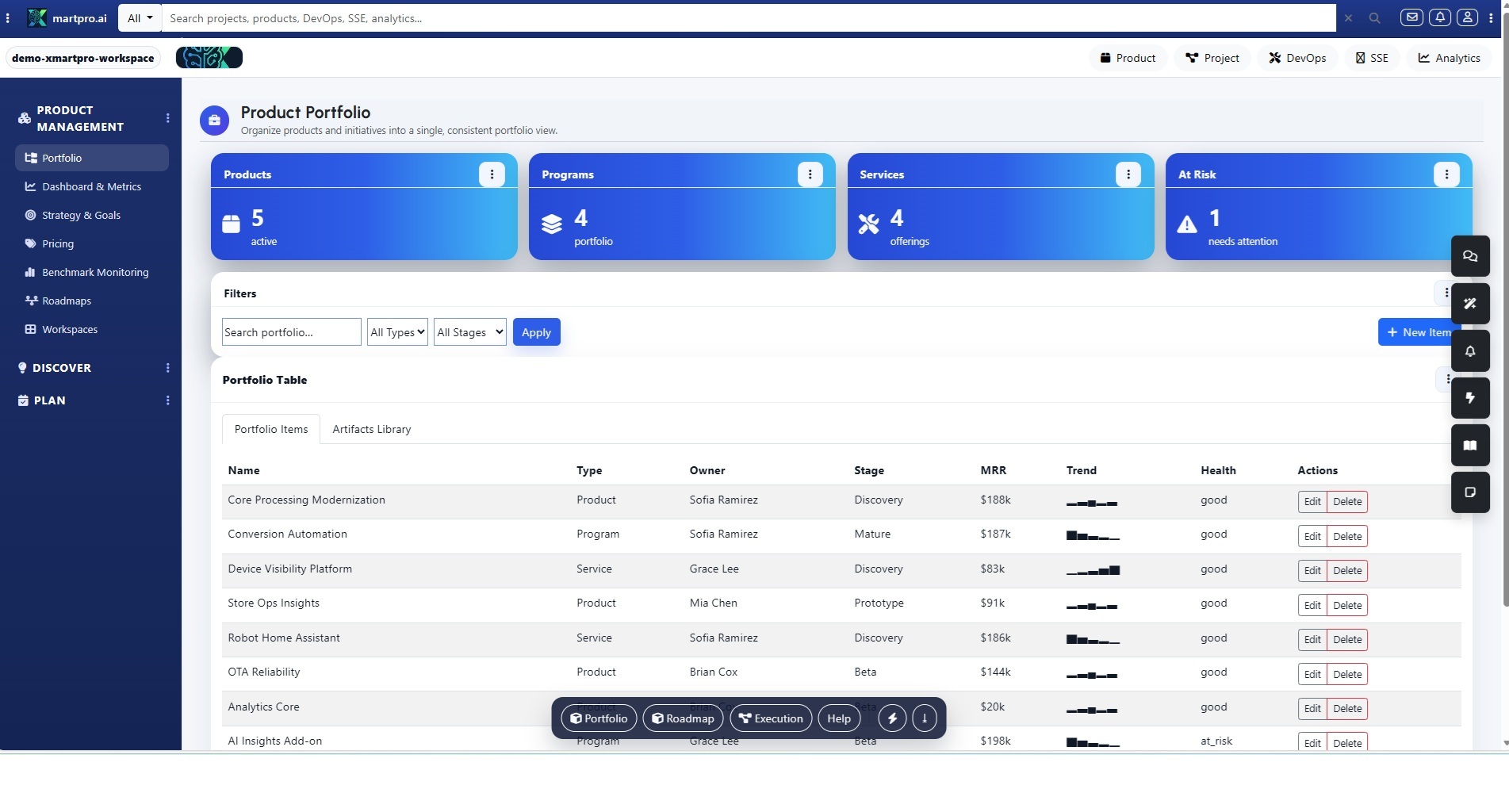
The use cases presented during the initial launch are a dynamic approach to motivate the use of Xmartrpo.ai solution, the name of the companies used for this launch are ficticious. In this project Overview in XmartPro.ai summarizes how teams connect strategy to execution without breaking context. The platform keeps roadmaps, backlogs, and sprints inside one workflow, so planning and delivery stay aligned as priorities evolve. Instead of copying work across tools, teams manage a single chain of artifacts—from outcome themes to epics, stories, and sprint commitments—while leadership retains clear visibility into progress, risk, and delivery confidence at every step.
This use case highlights a practical path: product leaders shape roadmap intent, delivery teams translate it into executable work, and QA plus release owners ensure quality gates are met before launch. XmartPro.ai makes the flow efficient by linking everything automatically: roadmap candidates map to epics, epics decompose into stories, and stories become sprint-ready items with traceable scope. When something changes, the impacts are visible immediately—what shifts in the sprint, what moves on the roadmap, and what milestones are at risk.
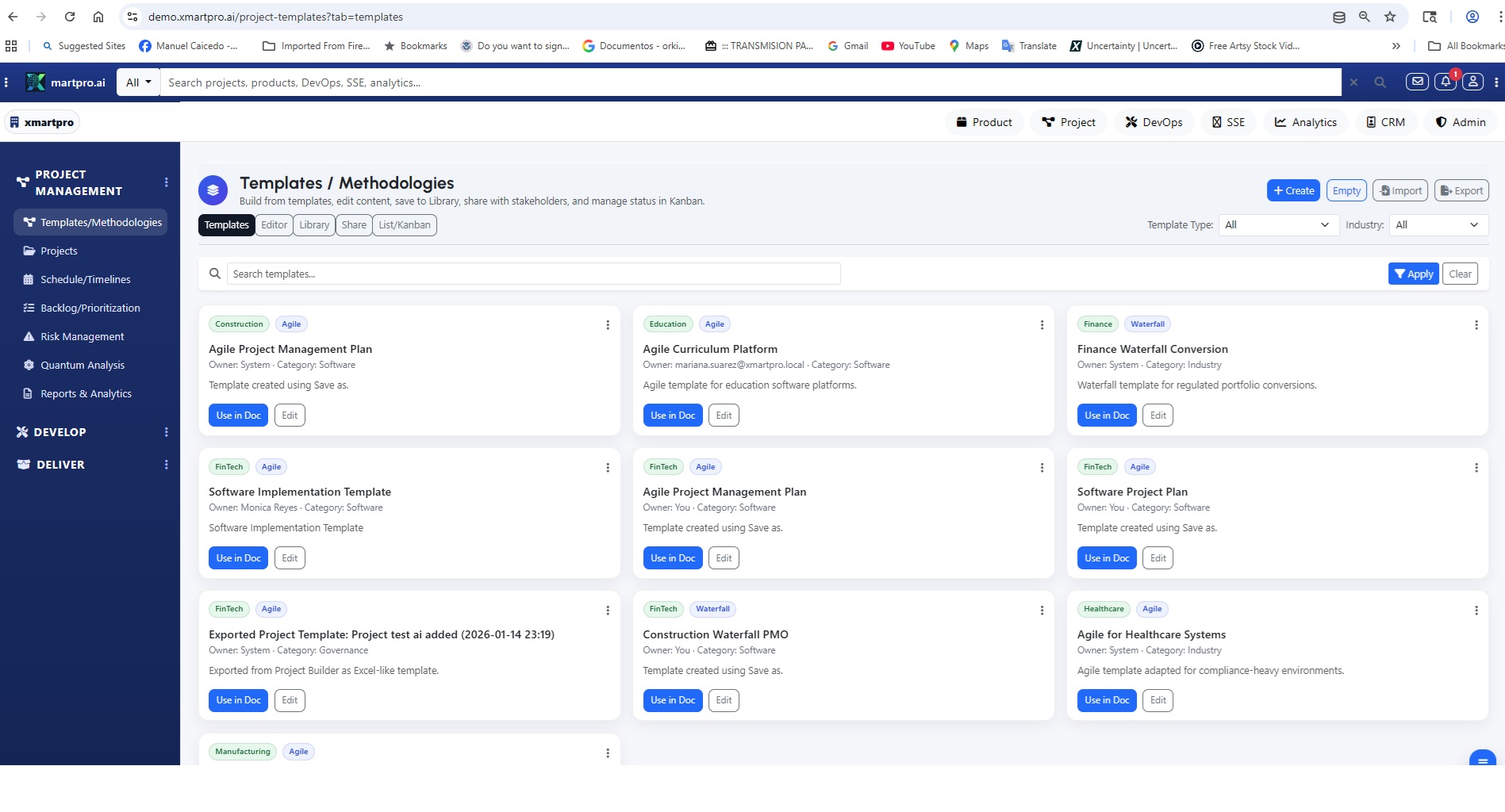
Epic and story templates provide the standardization that prevents “requirements drift.” Teams reuse proven structures for problem statements, user outcomes, constraints, dependencies, and success metrics, so every epic is measurable and every story is buildable. Templates also include prompts for edge cases and non-functional requirements, ensuring teams capture performance, security, and observability needs early—before they become late-cycle surprises that delay releases or increase defects.
Acceptance criteria is treated as a delivery contract, not a checkbox. Stories include clear “done” conditions—often in Given/When/Then style—so engineering, QA, and product validate the same expectations. This drives cleaner handoffs, faster reviews, and fewer back-and-forth cycles. Because criteria is tied to testing and readiness, teams gain confidence that what’s marked “done” is truly ready to ship, not just coded and waiting for validation.
Sprint scheduling becomes more predictable because it’s driven by real capacity and traceable priorities. The Sprint Scheduler turns backlog intent into committed scope, sprint goals, and iteration plans that map back to roadmap outcomes. When scope churn happens, XmartPro.ai shows what changed, why it changed, and the knock-on effects—helping teams negotiate tradeoffs with evidence instead of opinions. This keeps delivery velocity high while protecting the trust that stakeholders place in plans.
Execution reporting reduces the “status theater” that slows teams down. Progress rolls up from stories, work items, QA checks, and milestone gates, producing clear views of throughput, cycle time, spillover, and blockers. Leaders can spot delivery risks early—dependencies, capacity gaps, or quality regressions—without forcing teams into constant manual reporting. The result is faster course correction, fewer late surprises, and stronger delivery confidence across multiple squads.
QA checks are embedded in the same workflow, so quality is managed continuously rather than at the end. Stories can require test cases, validation steps, environment readiness, and coverage links before they move forward. QA teams can map tests to acceptance criteria and track defect patterns across epics and releases. This makes it easy to see which strategic outcomes are blocked by quality issues and where to focus improvements—without slowing delivery with heavy process.
Release readiness workflows connect Develop to Deliver with consistent gates. Teams use readiness checklists for documentation, security, performance, accessibility, support enablement, and rollback plans, so shipping becomes repeatable. Milestones and deliverables are produced from the same linked work, and release reporting summarizes what’s included, what changed, and what to monitor post-launch. This replaces “release week chaos” with a calm, observable process that scales.
Deliverables and documentation are treated as first-class outputs, not afterthoughts. XmartPro.ai ensures the release package includes what customers, support teams, and compliance reviewers need: updated docs, enablement notes, change logs, and measurable expectations. Because all content is connected back to epics and stories, teams can quickly answer what shipped, why it mattered, and how it ties to the roadmap—making leadership updates and customer communication significantly easier.
Expected results are tangible: faster time-to-plan, higher sprint predictability, fewer defects escaping to production, and smoother releases with clearer accountability. By keeping roadmaps, backlogs, sprints, QA checks, and release readiness in one workflow, XmartPro.ai reduces rework and eliminates context loss. Teams spend more time building and less time translating. Stakeholders gain real-time visibility, and customers experience more stable, reliable improvements release after release.