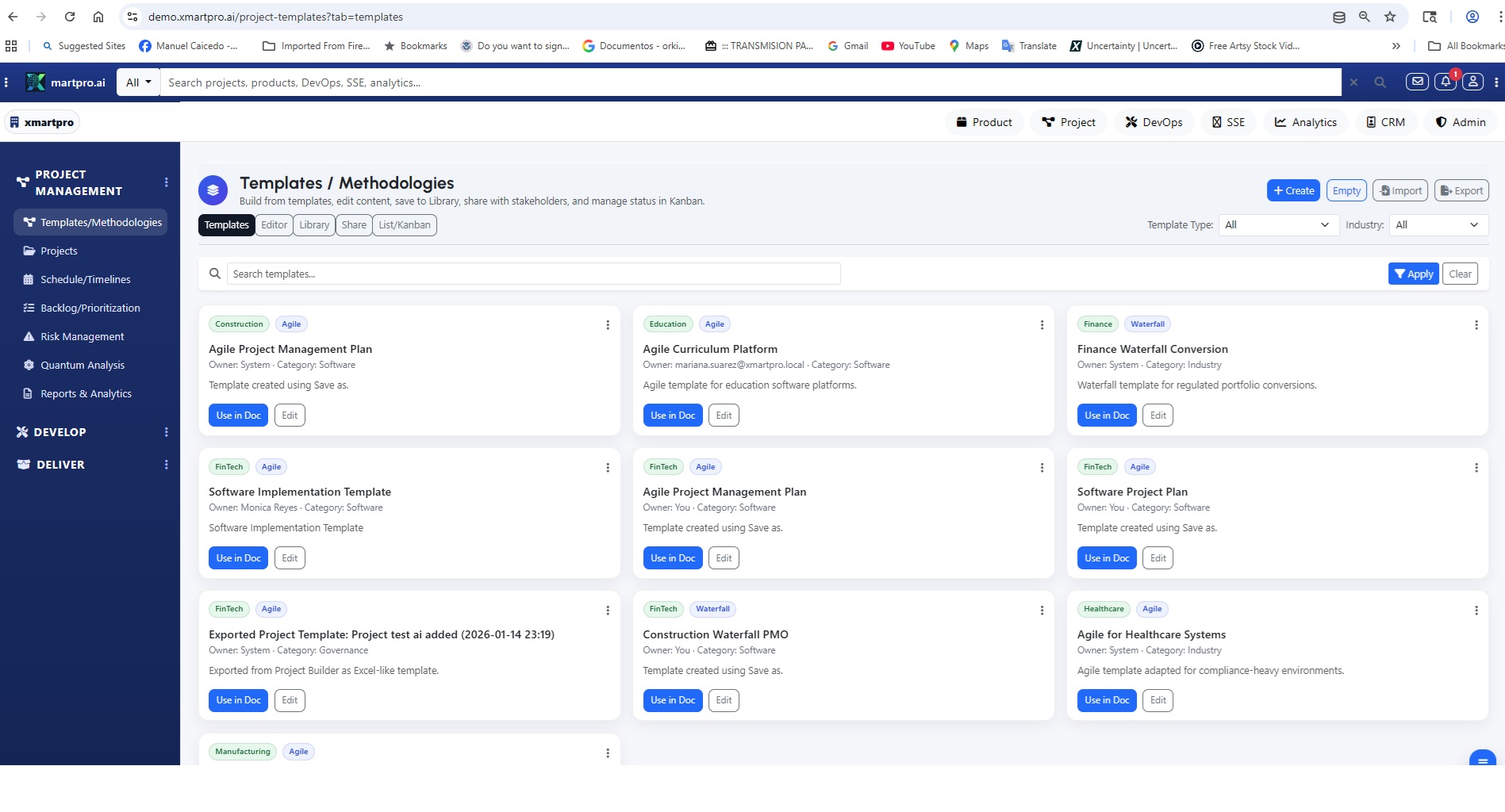
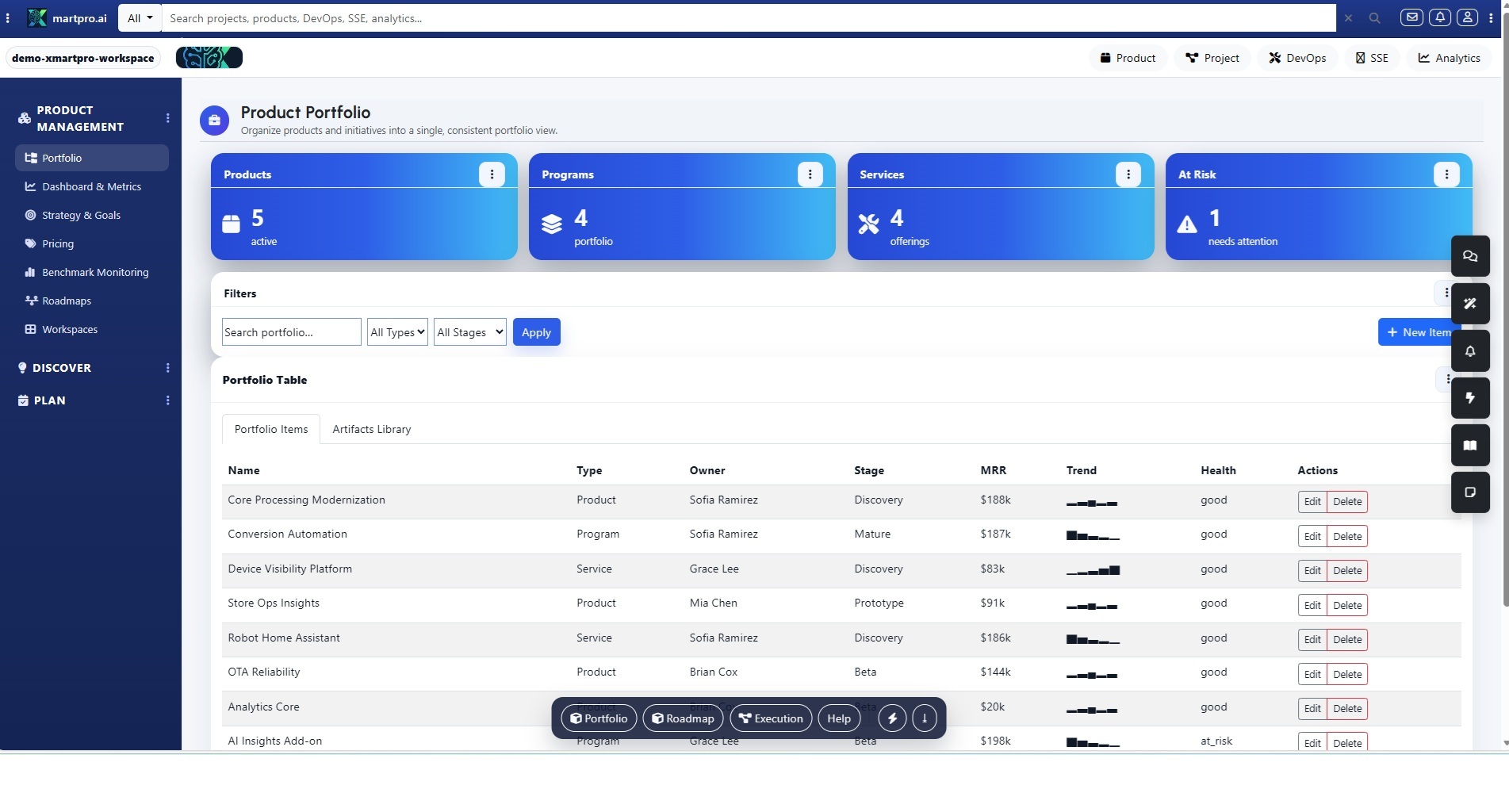
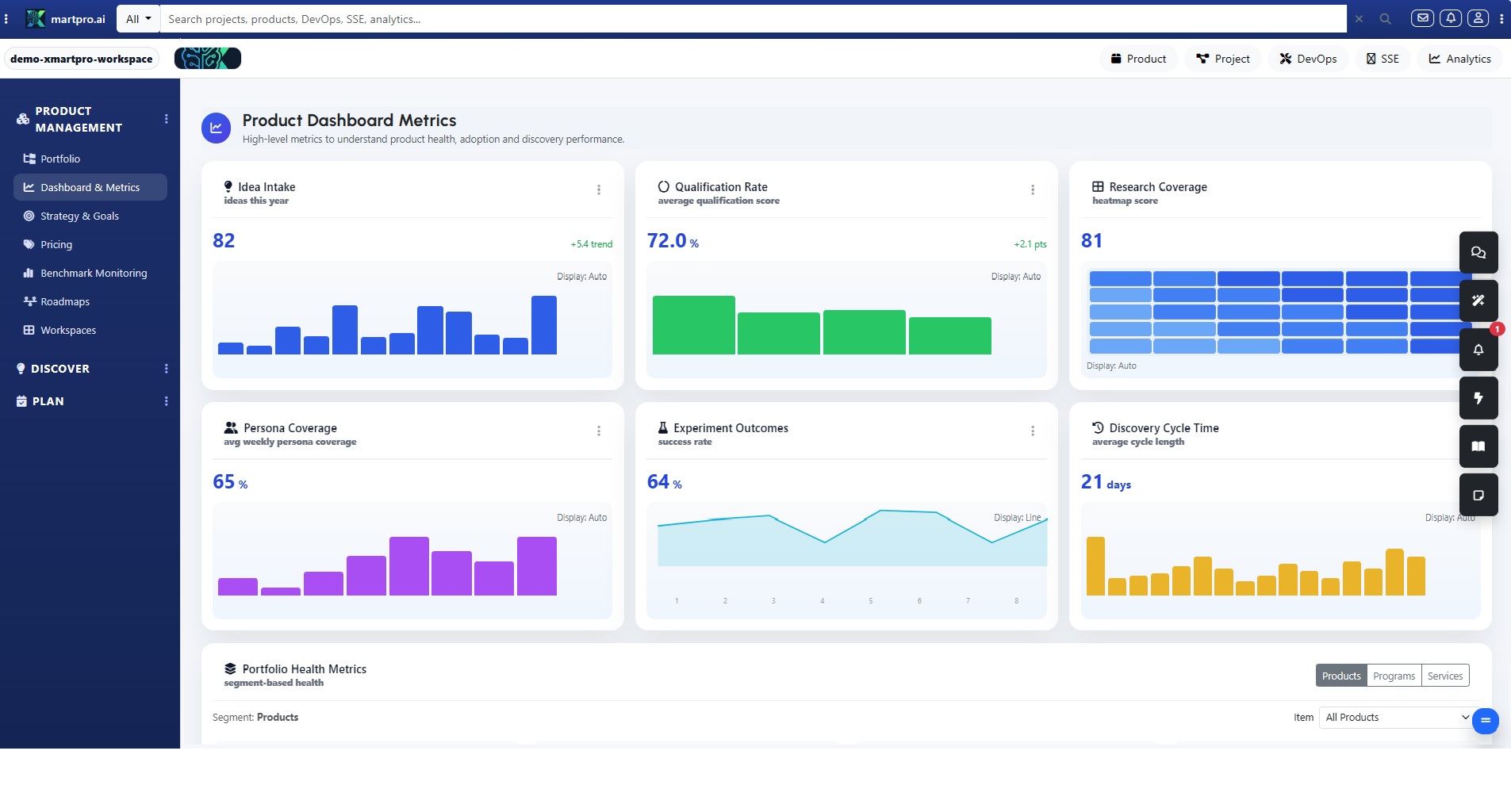
The use cases presented during the initial launch are a dynamic approach to motivate the use of Xmartrpo.ai solution, the name of the companies used for this launch are ficticious. In this case our use case shows how AI Copilot compresses weeks of writing into one focused session—without losing rigor. You start with an idea and messy stakeholder notes, and you end with a PRD, epics, user stories, and acceptance criteria that are ready for sprint planning. Every artifact stays linked to the original goal, KPI, and decision trail, so delivery remains measurable and auditable. This is strategy-to-execution with traceability built in, not stitched together after the fact.
Begin in Project Management by capturing the idea intake with structure. Create a new entry using your template fields: problem statement, target users, urgency, constraints, competitive context, and expected business impact. Attach screenshots, emails, call transcripts, or meeting docs, then tag owners and impacted domains. XmartPro.ai keeps this intake as the “source record,” so the AI Copilot session can reference it directly and your team never has to retype the same context across tools or meetings again.
Next, add stakeholder notes the way teams actually work: imperfect, fast, and multi-voice. Paste notes from interviews, workshops, sales calls, and support escalations into the intake record, then label them by stakeholder type (customer, legal, ops, engineering) and theme (risk, UX, cost, timeline). If you have conflicting inputs, keep them—Copilot will surface contradictions as decisions to resolve. This step is the difference between a generic PRD and one that reflects real-world constraints.
Now launch AI Copilot from the intake record and run a single guided session. Copilot asks targeted questions, then drafts a complete PRD: objective, background, assumptions, in-scope/out-of-scope, user journeys, requirements, and success metrics. It also proposes tradeoffs and open questions for review. Because the PRD is generated inside the Project section, it remains linked to the original intake, stakeholders, and evidence—so the document is living, not a PDF that drifts the moment execution starts.
With the PRD in place, Copilot proposes roadmap candidates and converts the work into outcome-driven epics. Each epic includes a measurable goal, scope boundaries, dependencies, risks, and an initial estimate range—so leaders can prioritize with clarity. You can place epics on a timeline, group them under a milestone, and map them to a KPI like conversion rate, deflection, latency, or retention. If priorities shift, you adjust once and the traceability stays intact across every downstream item and owner.
Next, Copilot generates user stories from each epic and keeps them aligned to the user journey. Stories are written with clear roles and value statements, plus acceptance criteria that QA can test. You can choose formats like Given/When/Then and include non-functional targets such as performance, security, accessibility, and observability. Because these stories are created in Develop, they automatically connect to Story Map views, Work Items, and QA tests—turning requirements into executable work without copy/paste churn.
Traceability is the system’s superpower. In Project Management, link the PRD and each epic to explicit goals and KPIs, then define baselines, targets, and when success will be measured. XmartPro.ai shows a chain: goal → KPI → PRD section → epic → story → test → release. When someone asks “why are we building this?” you answer in one click. When a KPI dips, you trace back to related epics, see what shipped and what’s in flight, and adjust with evidence—not opinions. Dashboards keep the decision trail visible for audits and exec reviews.
Plan execution with the Sprint Scheduler using the Copilot-generated backlog as your starting point. Pull the highest impact stories into a sprint goal that names the KPI you’re moving, not just the feature you’re building. Capacity indicators keep commitments realistic, while execution reporting rolls up automatically from story status, work items, and tests. If scope changes mid-sprint, you can see the impact on milestones and KPIs immediately, making tradeoffs visible and collaborative instead of chaotic.
Quality and release readiness are handled as workflows, not last-minute heroics. Use QA checks tied to acceptance criteria, then run readiness gates for documentation, support enablement, security review, and monitoring. Copilot can draft release notes and update-ready knowledge snippets from the PRD and completed stories, keeping communication consistent. Deliverables and milestones in the Deliver section keep shipping predictable, while reports highlight remaining risks, dependencies, and post-release watch metrics for the team.
Expected results: faster planning, higher quality requirements, and measurable delivery outcomes. Teams cut PRD time dramatically, reduce rework caused by vague stories, and ship with clearer confidence because acceptance criteria and QA checks are aligned. Leaders gain KPI-driven prioritization and a transparent decision trail that survives staffing changes and shifting priorities. Most importantly, customers feel the improvement faster—because XmartPro.ai turns ideas into aligned execution in one session, then keeps the work traceable through every release.