1901 North Roselle Road, Suite 800 #8198
Schaumburg, IL 60195


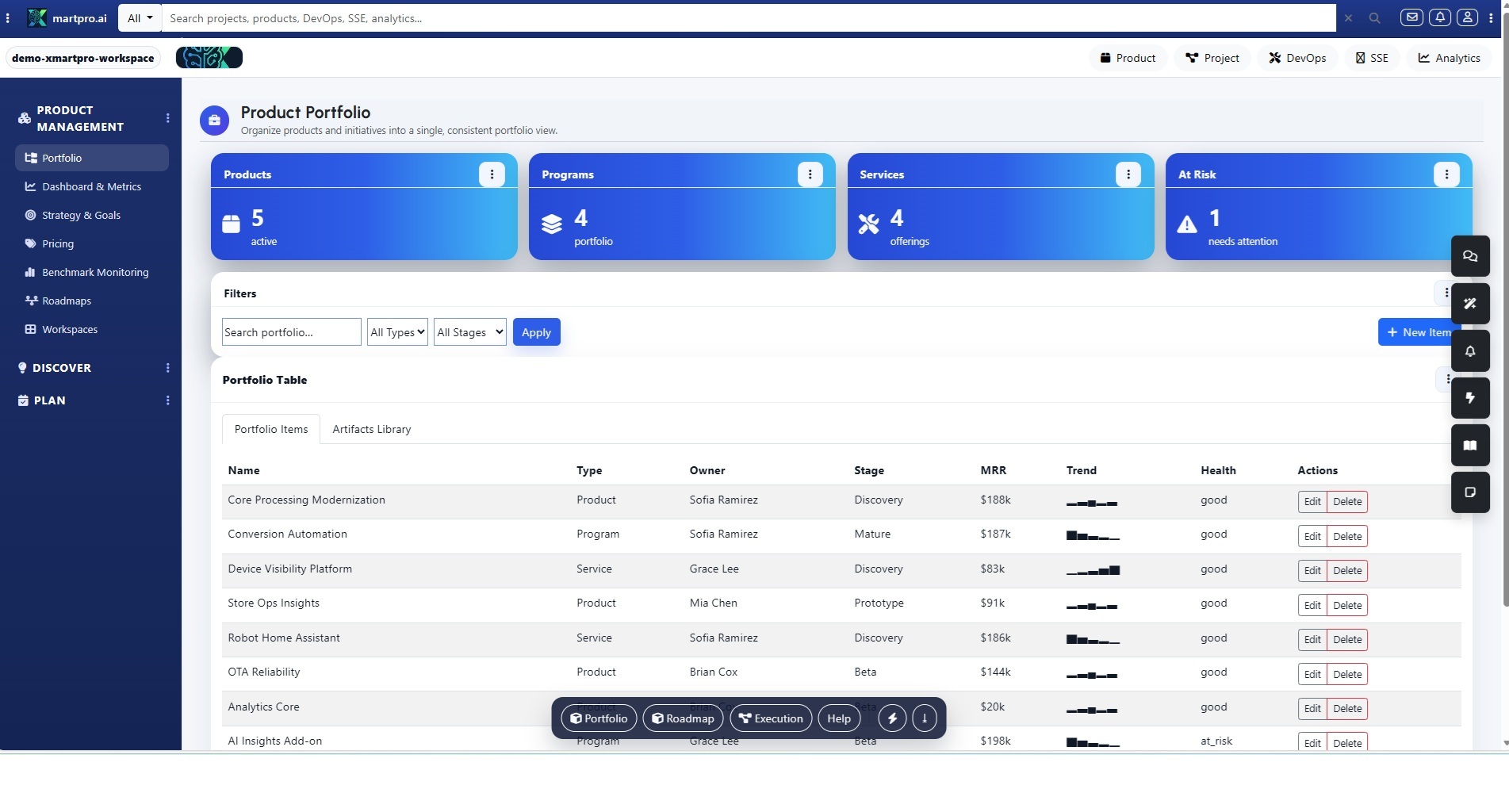
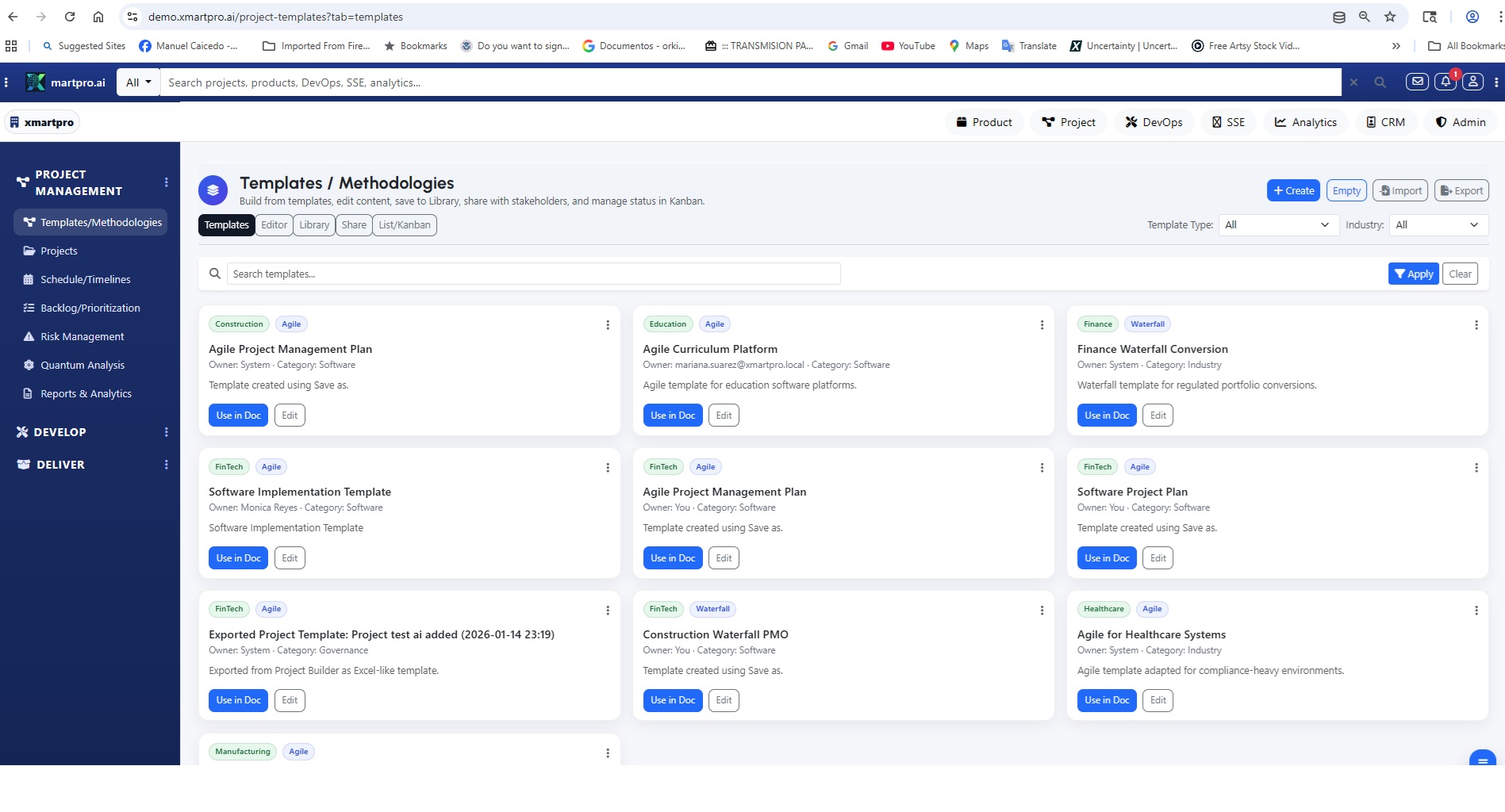
XmartPro.ai’s Delivery Execution workspace turns approved roadmaps into predictable releases. From the left navigation you can set consistent “Templates/Methodologies,” spin up “Projects,” define “Schedule/Timelines,” and run “Backlog/Prioritization” with real governance—not extra meetings. The AI Copilot keeps everyone aligned by summarizing decisions, capturing scope changes, and auto-drafting the artifacts leaders always ask for: weekly status, risks, blockers, and next actions. Teams standardize ceremonies (grooming, planning, review, retro) and keep outcomes attached to the project timeline, so execution stays transparent, measurable, and repeatable across squads, vendors, and tenants—even when priorities change mid-quarter.
Start in DEVELOP with Epic and user story management that stays connected to business value. Create Epics from roadmap initiatives, map them in Story Map, then decompose into Stories and Work Items with clear ownership, dependencies, and target releases. Copilot can propose story splits, identify missing requirements, and generate acceptance criteria aligned to the persona and outcome you validated in discovery. You can add “ready” checklists, estimate consistently, and tag work by component, customer segment, or compliance area. For cross-team programs, link epics across projects to visualize dependency chains and critical paths. Result: cleaner grooming, fewer “what did we mean?” debates, and more time building.
Quality is enforced through Acceptance Criteria, Definitions of Done, and QA checks embedded in every item. XmartPro.ai lets you standardize DoD per methodology (Scrum, Kanban, Hybrid), require evidence fields (screenshots, logs, test runs), and add gates for security, performance, accessibility, and observability. Define a “Definition of Ready” too, so only well-formed stories enter a sprint. In “QA – Tests,” track test cases, link bugs to the exact story and requirement, measure coverage, and keep a lightweight audit trail for regulated teams. Copilot helps by spotting ambiguous wording, suggesting edge cases, and drafting test ideas (happy path + negative cases) so QA, engineering, and product share the same target before code is merged and deployed.
Sprint scheduling and execution reporting are built for reality, not perfect plans. With Sprint Scheduler, plan capacity by role, set sprint goals, and pull the right stories from the prioritized backlog—then watch flow update from actual work-item states. Execution Reports generate sprint review narratives, velocity trends, spillover analysis, forecasting, and root-cause notes for missed commitments (scope creep, dependency delays, underestimation, outages). Copilot can summarize daily standups and convert blockers into actionable work items with owners and due dates. Risk Management keeps RAID items visible, while “Quantum Analysis” helps quantify uncertainty and run scenarios, so stakeholders understand options: de-scope, re-sequence, or shift capacity—before deadlines slip and trust erodes.
Finally, DELIVER closes the loop with traceability from discovery to release. Track Milestones, Deliverables, Documentation, and Reports as first-class outputs, linking each back to the epic/story/test evidence that proves “done.” Every release can show the full chain: Idea Intake → pain point → scoring → roadmap decision → epic/story → QA results → shipped deliverable and docs. This traceability reduces rework, strengthens stakeholder confidence, and accelerates onboarding for new engineers, support teams, and ISV partners. Request a demo and we’ll walk your team through a real end-to-end flow—using your process, your success metrics, and a pilot plan that measures cycle time and outcome impact.